Types of Saree: A Complete Guide to Traditional Elegance
India, a land of cultural richness and diversity, is home to one of the most graceful garments in the world — the saree. With every region having its own style, weave, and story, sarees represent not just clothing but a legacy. In this article, we’ll explore the various types of saree found across India, focusing on popular and iconic varieties like Banarsi Saree, Bhandhej Saree, and many more. Whether you’re a saree enthusiast, a fashion lover, or a bride-to-be, this guide will help you understand the beauty of Indian sarees.
1. What is a Saree?
A saree (or sari) is a traditional Indian outfit worn by women, consisting of a long unstitched piece of fabric, usually ranging from 5 to 9 yards, draped elegantly around the body. It is typically paired with a blouse (choli) and a petticoat (underskirt). The art of draping a saree varies by region and occasion, making it a versatile and timeless garment.
2. Banarsi Saree: A Regal Weave from Varanasi
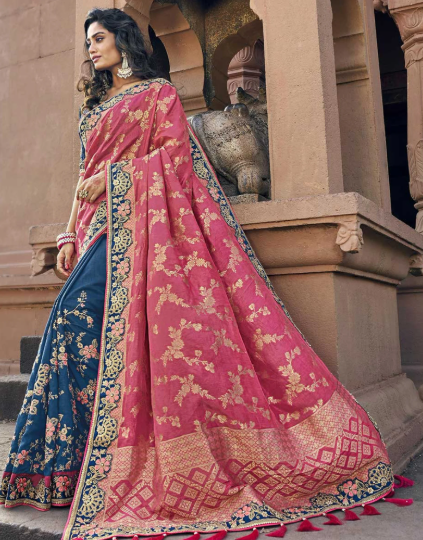
One of the most luxurious and celebrated types of saree in India is the Banarsi Saree. Originating from the city of Varanasi, this saree is known for its rich silk fabric, intricate zari work (gold or silver thread), and Mughal-inspired motifs.
Key Features of Banarsi Saree:
- Heavy silk fabric
- Intricate gold and silver brocade work
- Ideal for weddings and festive occasions
- Designs include floral, paisley, and temple borders
Banarsi Sarees are a top choice for Indian brides and a must-have in any ethnic wardrobe.
3. Bhandhej Saree: The Art of Tie and Dye from Rajasthan & Gujarat
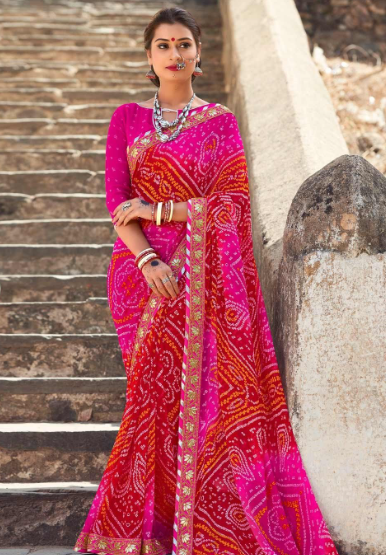
Another beloved type of saree is the Bhandhej Saree, also known as Bandhani. This saree comes from Rajasthan and Gujarat and features colorful tie-dye patterns made by plucking the cloth and tying it tightly with thread before dyeing.
Unique Traits of Bhandhej Saree:
- Vibrant patterns and color combinations
- Traditional dots, waves, and zigzag designs
- Made from cotton, georgette, or silk
- Lightweight and perfect for summers and casual wear
A Bhandhej Saree adds a pop of color and tradition to your wardrobe, ideal for both everyday wear and festive gatherings.
4. Kanjeevaram Saree: South India’s Timeless Treasure
Kanjeevaram sarees hail from Tamil Nadu and are famous for their durability, bright colors, and bold golden borders. Woven with pure mulberry silk, they are often adorned with temple designs, checks, stripes, and floral buttas.
Why Choose a Kanjeevaram Saree?
- Perfect for South Indian weddings
- Heavy silk with real zari
- Durable and vibrant
- Status symbol in South India
5. Chanderi Saree: Light and Elegant Weave from Madhya Pradesh
Chanderi sarees are known for their sheer texture, lightweight feel, and subtle shimmer. They are made using silk, cotton, or a mix of both, with delicate motifs woven into the fabric.
Highlights:
- Ideal for office wear and casual events
- Soft, breathable material
- Traditional patterns like peacocks, lotuses, and coins
6. Paithani Saree: Maharashtrian Marvel
Originating from Maharashtra, the Paithani Saree is woven with fine silk and metallic threads. These sarees are famous for their peacock and lotus motifs, especially on the pallu (end part of the saree).
Signature Features:
- Bright, festive hues
- Intricate pallu designs
- Perfect for Maharashtrian weddings and festivals
7. Patola Saree: The Double Ikat Delight from Gujarat
The Patola Saree is a luxury textile from Patan, Gujarat. Made using a double ikat weaving technique, this saree is extremely time-consuming to produce and known for its vibrant geometric patterns.
Why It’s Special:
- Extremely precise handwork
- Symbol of royal status
- Often gifted as heirloom pieces
8
Benefits of Wearing Tussar Silk Saree:
- Lightweight and breathable
- Eco-friendly fabric
- Looks elegant and understated
9. Nauvari Saree: The Warrior Drape of Maharashtra
Features:
- Worn without a petticoat
- Comfortable for movement
- Symbol of traditional Maharashtrian pride
10. Cotton Sarees: Comfort Meets Culture
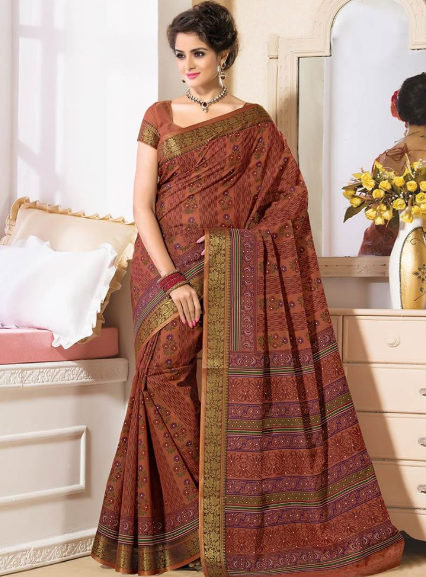
Cotton sarees are ideal for hot and humid climates and perfect for daily wear. Available in a wide range of regional styles like Bengal cotton, Sambalpuri cotton, and Chettinad cotton, they are both affordable and elegant. Available in a wide range of regional styles like Bengal cotton, Sambalpuri cotton, and Chettinad cotton, they are both affordable and elegant.
Why Cotton Sarees Are Popular:
- Easy to drape
- Comfortable and sweat-absorbent
- Ideal for casual and office wear
11. Georgette and Chiffon Sarees: Lightweight Modern Glam
For those who prefer a contemporary twist to the traditional saree, georgette and chiffon sarees offer a perfect blend of comfort and style.
Pros of These Sarees:
- Easy to handle for beginners
- Modern prints and embroidery
- Suitable for semi-formal occasions
12. Sambalpuri Saree: Odisha’s Handwoven Beauty
The Sambalpuri saree is a traditional handwoven saree from Odisha featuring unique motifs and designs made using the ikat technique.
13. Kota Doria Saree: Feather-Light from Rajasthan
Kota Doria sarees are made in Kota, Rajasthan, and are known for their transparent and lightweight feel. These sarees are a blend of cotton and silk with fine square patterns called “khats.”
Ideal For:
- Summers and daily wear
- Light festive occasions
- Gifting options
Each type of saree mentioned in this guide carries its unique craftsmanship and cultural importance. While some are suited for grand occasions like weddings and festivals, others are perfect for daily wear and formal meetings. So, whether you are building your trousseau, updating your wardrobe, or simply appreciating Indian textiles, explore these beautiful saree varieties and embrace the elegance they bring.
Conclusion: Which Saree Should You Choose?
The world of sarees is vast, vibrant, and deeply rooted in Indian culture.
Whether you’re drawn to the royal charm of the Banarsi Saree, the colorful beauty of the Bhandhej Saree, or the regal appeal of a Kanjeevaram or Paithani, https://www.thereet.info/wp-admin/https://www.thereet.info/wp-admin/there’s a saree for every personality and occasion.
Each type of saree mentioned in this guide carries its unique craftsmanship and cultural importance. So, whether you are building you